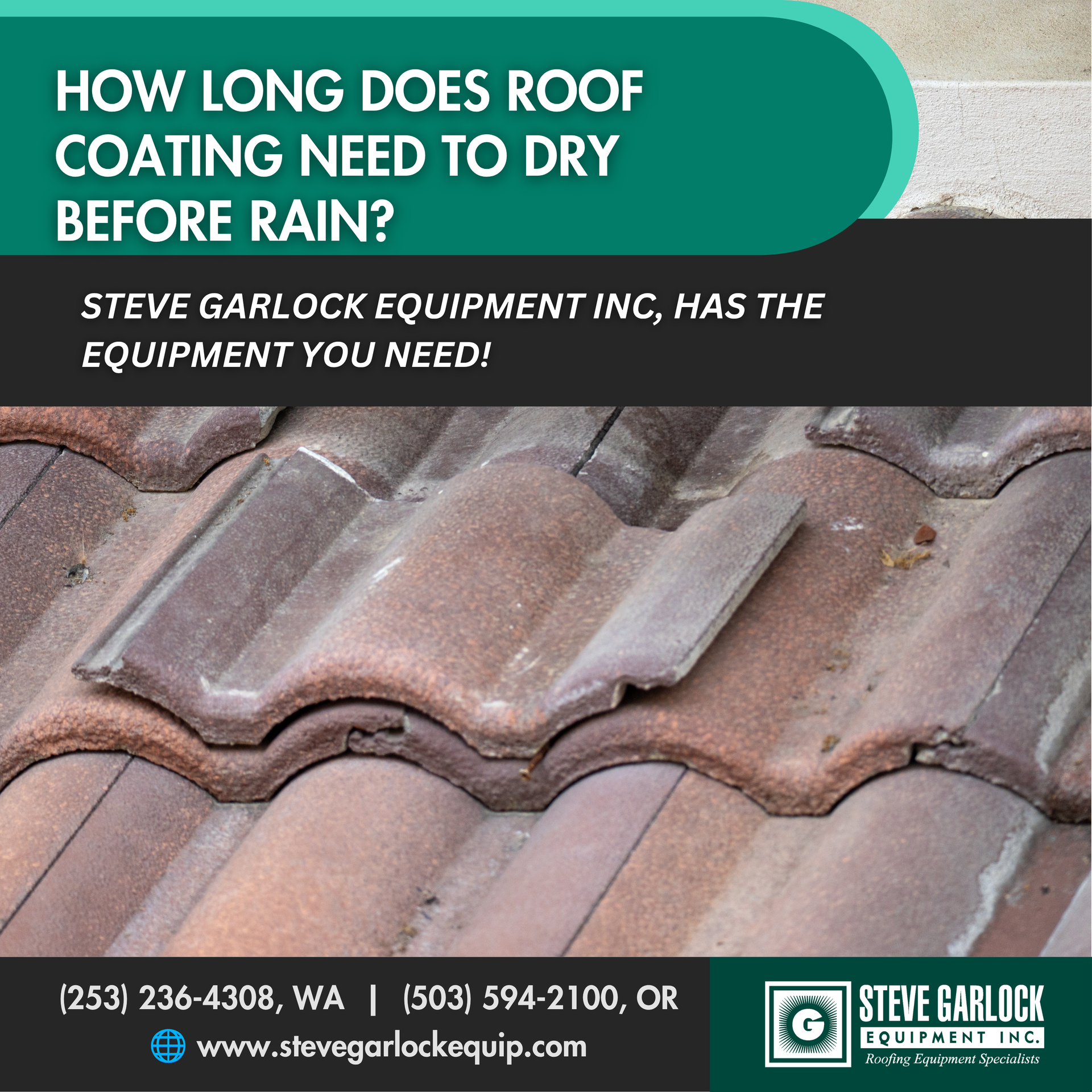
How Long Does Roof Coating Need to Dry Before Rain?
How Long Does Roof Coating Need to Dry Before Rain? Expert Tips to Prevent Costly Damage
A freshly coated roof is one of the most effective ways to extend a building’s lifespan, but timing is everything. One unexpected rain shower can turn a promising maintenance job into a costly setback. That is why understanding How long roof coating needs to dry before rain is essential for every property owner and contractor. With the right knowledge and support from experts like Steve Garlock Equipment, you can protect your investment and ensure lasting performance from every application.
Steve Garlock Equipment has long been trusted to deliver practical guidance and reliable solutions for roofing maintenance. From selecting the right coating to understanding drying behavior, Steve Garlock Equipment helps ensure every project starts and finishes on solid ground.
Understanding How Long Does Roof Coating Need to Dry Before Rain and Why It Matters
Knowing how long roof coating needs to dry before rain is not just a technical detail; it directly impacts the durability of your roof. If rain hits the surface too early, it can wash away uncured material, weaken adhesion, and lead to premature failure.
For most roofing systems, a minimum surface dry stage must be achieved before exposure to moisture. However, full performance only comes after complete curing. This difference between surface readiness and full cure is where many mistakes occur.
Steve Garlock Equipment emphasizes that understanding timing is the foundation of successful roofing maintenance. Whether you’re working with acrylic or elastomeric roof coatings, proper planning prevents expensive rework and damage.
What Affects Roof Coating Dry Time and Drying Times
Several variables influence dry time and overall drying times for roof coatings. No two environments behave exactly the same, which is why professionals always assess conditions before starting.
Key factors include:
- Temperature of the roof surface and the surrounding air
- Humidity levels in the atmosphere
- Wind flows across the building
- Thickness of the applied coating
- Type of coating used
Higher moisture and humidity significantly slow the drying process, while warm, dry weather can accelerate it. Steve Garlock Equipment often advises contractors to always check forecast stability before starting a project to avoid unexpected weather interruptions.
In many cases, what seems like a simple application can quickly become complicated if weather conditions shift unexpectedly during curing.
The Role of Weather Conditions in the Roof Coating Drying Process
The impact of weather conditions on roof performance cannot be overstated. Rain, wind, and sudden temperature drops can all disrupt the natural drying process of a freshly applied coating.
Moisture in the air slows evaporation, meaning the coating remains vulnerable for longer. Similarly, cool temperatures reduce chemical activity in the material, delaying proper bonding.
Steve Garlock Equipment highlights that even slight changes in weather can affect whether a roof coating reaches a safe surface-dry stage before exposure to rain. This is why professionals constantly monitor forecasts during active projects.
Ideal conditions usually include:
- Dry weather for at least 24–48 hours
- Moderate temperatures between 50°F and 85°F
- Low humidity levels
- No chance of rain during curing
Minimum Drying Time Before Rain Exposure for Different Coatings
Different roof coatings have different drying-time expectations. There is no universal answer, but general guidelines help reduce risk.
Most acrylic systems require at least several hours of surface drying before exposure to light moisture. Elastomeric systems often need longer due to their thicker consistency.
Steve Garlock Equipment recommends always following manufacturer specifications while also allowing extra buffer time for unpredictable weather shifts.
Typical expectations include:
- Acrylic coatings: 4–8 hours for surface dry
- Elastomeric coatings: 6–12 hours or more
- Cooler climates: extended drying window required
- High humidity environments: significantly longer drying periods
These estimates should always be adjusted based on actual weather conditions and job site environment.
Acrylic vs Elastomeric Roof Coatings and Their Drying Behavior
Not all coatings behave the same during the drying process. Acrylic and elastomeric systems are two of the most commonly used, but their performance differs significantly.
Acrylic coatings tend to dry faster due to water evaporation. However, they are more sensitive to sudden rain before full curing. Elastomeric coatings, on the other hand, are thicker and require more time but offer stronger flexibility once fully cured.
Steve Garlock Equipment often helps contractors choose between these systems based on project requirements, climate, and expected exposure.
Understanding these differences helps ensure the roof coating is applied under the right conditions and allowed sufficient time to fully cure without interruption.
Surface Dry vs Full Curing: What Property Owners Must Know
One of the most misunderstood aspects of roofing maintenance is the difference between the surface-dry and fully-cured stages. A coating may feel dry to the touch within hours, but still not be structurally ready.
Surface dry simply means the top layer is no longer tacky. Full curing, however, is when the coating has completely hardened and achieved its final protective properties. Steve Garlock Equipment stresses that premature exposure to rain before full curing can compromise the entire system.
To clarify:
- Surface dry: safe to touch, not weatherproof
- Partial cure: some resistance to moisture, still vulnerable
- Fully cured: complete protection and long-term durability
Skipping proper drying time can lead to peeling, bubbling, and reduced lifespan of the roof coatings.
Common Mistakes During Roof Coating Before Rain and How to Avoid Them
Many roofing issues occur not because of poor materials, but because of rushed application decisions. Applying a coating before checking the forecast is one of the most common mistakes.
Other frequent errors include uneven application, ignoring humidity levels, and assuming dry weather will last.
Steve Garlock Equipment advises professionals and property owners to always plan ahead and respect environmental limitations.
Common mistakes include:
- Applying the coating too late in the day
- Ignoring rising humidity levels
- Using incorrect thickness during application
- Not allowing enough drying time between layers
Avoiding these mistakes ensures the roof maintains its integrity and prevents premature failures caused by trapped moisture or incomplete curing.
How to Extend Drying Time Effectively in Challenging Weather
Sometimes, conditions are not ideal, and contractors must adjust strategies to ensure proper results. Safely extending drying time can make a major difference in performance.
Steve Garlock Equipment recommends several practical approaches for managing challenging environments and protecting the coating during vulnerable stages.
When the weather is uncertain, consider:
- Applying thinner layers to promote faster evaporation
- Using early morning application windows
- Avoiding late evening applications when humidity rises
- Monitoring temperature changes throughout the day
- Protecting the roof surface with temporary coverings if needed
These steps help reduce risk and support a more stable drying process, even when ideal conditions are not available.
Professional Tips for Proper Drying and Maintenance of Roof Coatings
Achieving long-lasting results is not just about application; it is also about ongoing maintenance and timing. Proper planning ensures coatings perform at their best under real-world conditions.
Steve Garlock Equipment encourages consistent inspection and weather awareness during every stage of the project. Monitoring conditions before, during, and after application is essential for success.
With correct handling, most roof coating systems can deliver excellent durability and protection against water damage and environmental stress.
Steve Garlock Equipment also recommends periodic inspections to ensure the coating remains intact and continues to protect the building structure effectively. Over time, exposure to moisture, UV rays, and temperature fluctuations can impact performance, making maintenance a key part of long-term success.
Timing, Knowledge, and the Right Support Make All the Difference
Understanding How long roof coating needs to dry before rain is essential for preventing damage and ensuring long-term roof performance. From weather conditions to material selection, every detail plays a role in a successful application.
With expert guidance from Steve Garlock Equipment, property owners and contractors can confidently manage every stage of the roof coatings process, from application to full curing, without costly mistakes.
Contact Us
Every roof deserves the right timing, the right materials, and the right expertise. Steve Garlock Equipment is committed to helping you achieve reliable, long-lasting protection through smarter planning and professional insight. When you are ready to secure your building against unpredictable weather, trust Steve Garlock Equipment to guide you every step of the way.