How to Use a Roofing Harness?
How to Use a Roofing Harness? Properly to Prevent Falls and Injuries
Working on a roof requires more than skill and the right tools. It requires a strong commitment to safety. Even experienced roofing professionals can face unexpected hazards when working at heights. A properly fitted roofing harness can make the difference between a controlled workday and a serious accident.
Understanding how to use a roofing harness is essential for anyone involved in roofing projects, whether handling repairs, inspections, or installations. A safety harness provides essential fall protection when used with compatible equipment and a properly designed fall protection system. However, wearing one is not enough. Knowing how to inspect, fit, connect, and use it correctly is equally important.
At Steve Garlock Equipment, we understand the importance of having dependable equipment for demanding jobs. Choosing appropriate safety gear and learning how to use it correctly can help workers approach roofing tasks with greater confidence and preparation. In this guide, we explain the essential steps for using a roofing harness and reducing fall-related risks.
Understand How to Use a Roofing Harness for Better Safety
Before stepping onto a roof, workers should understand how their safety harness functions. A roofing harness is designed to distribute the forces created during a fall across stronger areas of the body, including the thighs, pelvis, chest, and shoulders. A full-body harness is an important component of a personal fall arrest system.
However, a harness does not work independently. It must be connected to compatible equipment that can safely stop a fall. This system may include a lanyard, lifeline, connectors, and an approved roof anchor.
When learning how to use a roofing harness, start by reading the manufacturer's instructions. Different harness systems have specific requirements for fitting, attachment, inspection, and maintenance. Steve Garlock Equipment encourages workers to understand their equipment before beginning any roofing activity.
Remember that fall protection should be planned before anyone climbs onto the roof. Waiting until work begins can leave workers exposed to unnecessary risks.
Choose the Right Harness and Equipment for Roofing
Not every safety harness is suitable for every roofing application. Choosing the correct model depends on the type of work, roof design, working height, and the fall protection system being used.
A full-body harness designed for construction or roofing applications is generally the appropriate choice for personal fall arrest. It should be compatible with the other components of the system and meet applicable safety requirements.
When choosing equipment, consider the following factors:
- Proper fit: Select a harness that matches the worker's body measurements and allows comfortable movement.
- Durable materials: Look for strong webbing, secure stitching, and reliable hardware.
- Adjustable straps: Shoulder straps, chest straps, and leg loops should provide a secure fit.
- Compatible connections: Make sure the lanyard, lifeline, connectors, and anchor work together as a complete system.
- Manufacturer approval: Check product instructions, weight limits, and inspection requirements.
The right equipment should support the work without creating additional hazards. At Steve Garlock Equipment, selecting suitable equipment for different job requirements is an important part of approaching projects responsibly.
Learn How to Wear a Roofing Harness Correctly
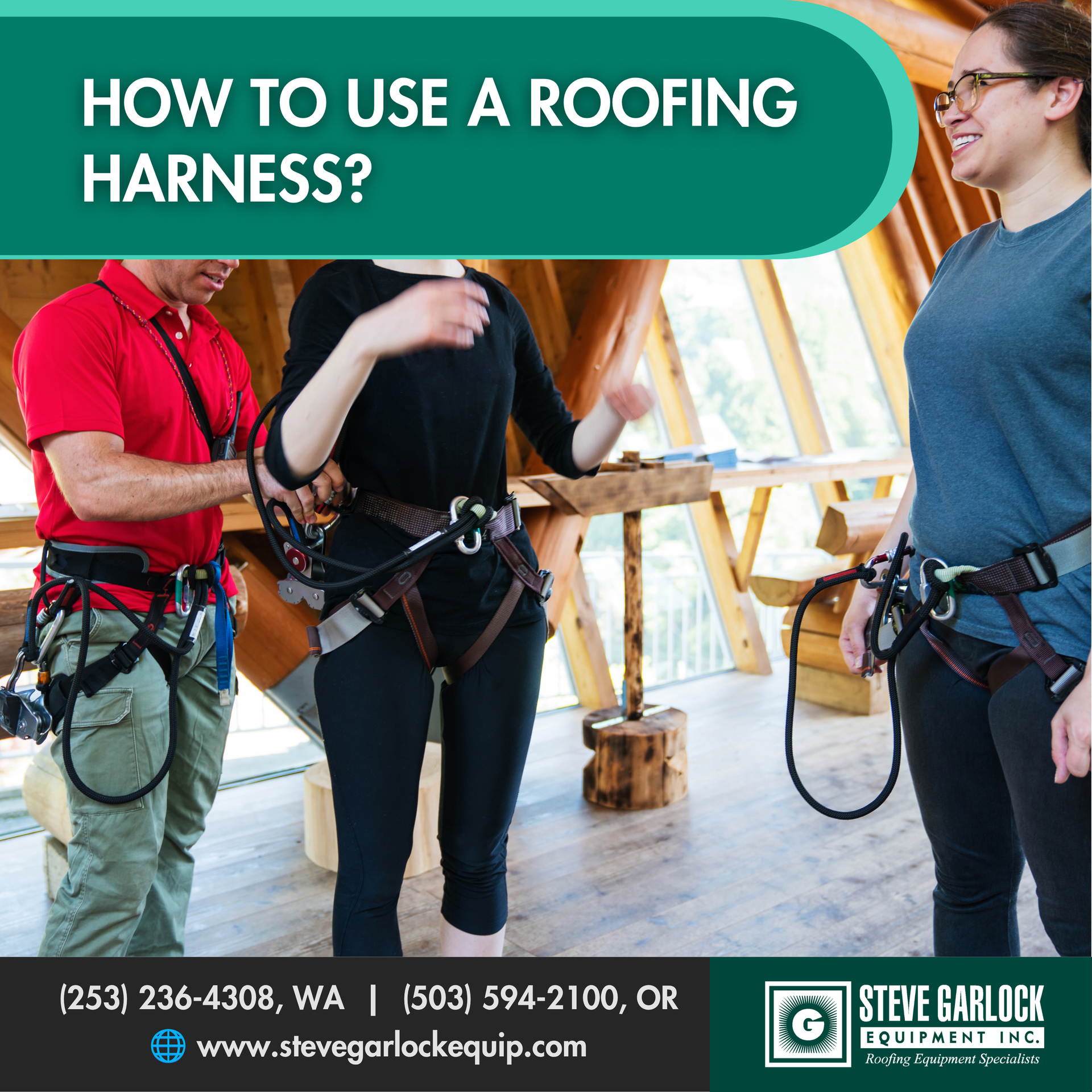
Wearing a harness incorrectly can reduce its effectiveness during a fall. Before putting it on, inspect the webbing, buckles, D-rings, and stitching for visible damage.
Hold the harness by its back D-ring and allow the straps to hang freely. Separate any twisted or tangled sections before putting it on. Step into the leg loops one at a time, then position the shoulder straps over your shoulders.
Connect the chest strap and adjust the leg loops, shoulder straps, and chest strap according to the manufacturer's instructions.
The harness must sit comfortably while remaining secure. It should not hang loosely, restrict normal movement, or place unnecessary pressure on the body. Leg loops should fit properly without being excessively tight.
Check that the back D-ring is positioned correctly, generally between the shoulder blades for a typical dorsal attachment system. Buckles must be properly fastened, and excess straps should be secured as instructed.
Steve Garlock Equipment recognizes that proper preparation matters just as much as having the right tools. Taking a few extra minutes to check the fit can help workers avoid problems once they reach the roof.
Inspect the Lanyard, Rope, and Other Safety Equipment
A roofing harness is only one part of a complete fall protection arrangement. The connecting equipment must also be in good condition and suitable for the intended application.
A lanyard connects the harness to an approved anchor or another compatible component. Some systems use energy-absorbing lanyards to reduce the forces experienced during a fall. Other systems use vertical lifelines with compatible rope grabs.
Before every use, examine the entire setup. Look for damaged webbing, cuts, fraying, corrosion, bent connectors, loose stitching, or other signs of deterioration.
Check that connectors close and lock properly. Make sure the rope or lifeline is compatible with the equipment and has no visible damage.
Never use a component that has been involved in a fall until it has been removed from service and evaluated according to the manufacturer's requirements. Damaged equipment should never be repaired with tape, knots, or makeshift materials.
Regular inspections help workers identify potential problems before they become dangerous. Steve Garlock Equipment understands that dependable equipment and responsible handling are important considerations for demanding work environments.
Identify a Secure Roof Anchor Point Before Starting
An anchor point is one of the most important parts of a roofing fall protection system. It provides the secure connection between the worker's harness and the supporting structure. Even a high-quality harness cannot provide proper fall protection if it is attached to an unsuitable anchor.
A roof anchor must be specifically designed, installed, and approved for the intended fall protection application. Its strength and compatibility should meet applicable regulations and manufacturer requirements.
Workers should never assume that a chimney, vent pipe, railing, or other roof feature can serve as a safe anchor. These structures may not be designed to withstand fall arrest forces.
Before work begins, a competent or qualified person, as applicable, should evaluate the anchorage location and the complete system. Steve Garlock Equipment recognizes that choosing appropriate equipment and planning its use are essential parts of responsible job preparation.
Understand Fall Arrest and Travel Restraint Systems
Not every roofing safety system serves the same purpose. Understanding the difference between fall arrest and travel restraint can help workers select the right protection for their tasks.
A fall arrest system is designed to stop a worker after a fall has started. It generally includes a full-body harness, connecting equipment, and a suitable anchorage. The system must be properly designed to limit fall forces and prevent the worker from striking a lower surface.
A travel restraint system works differently. It prevents workers from reaching an edge where they could fall. When properly configured, the connecting equipment limits movement so the worker cannot access the fall hazard.
Both systems require careful planning. Workers must consider roof dimensions, available anchor locations, potential obstacles, and the equipment's limitations.
Steve Garlock Equipment encourages a safety-first approach that considers the actual working conditions rather than relying on a single piece of protective equipment.
Connect the Harness and Lanyard Firmly and Correctly
After putting on the harness and identifying the approved anchor, the next step is connecting the system. Every connection must follow the manufacturer's instructions and the approved fall protection plan.
Attach the lanyard to the designated attachment point on the harness. For a typical personal fall arrest system, this is the dorsal D-ring located on the worker's upper back. Connect the other end to the approved anchorage or compatible connecting component.
Make sure all connectors are fully closed and locked. Avoid connecting components in ways that could cause accidental disengagement, excessive loading, or damage to the equipment.
Another important consideration is fall clearance. Workers need enough unobstructed space below them for the system to stop a fall before they hit the ground, equipment, or another surface. Swing-fall hazards must also be considered when selecting an anchor location.
A properly connected system helps provide the intended protection. However, workers should never improvise connections or use equipment outside its approved application.
Learn Safe Movement on the Roof While Wearing a Harness
Moving around a roof while connected to a safety system requires awareness and careful coordination. Roof surfaces may contain loose materials, uneven sections, wet areas, and unexpected obstacles.
Workers should maintain stable footing and avoid sudden movements that could cause them to lose balance. A ladder should be placed on a stable surface and secured according to applicable requirements. Safe access and proper transition between the ladder and roof are also important.
When moving across the roof, keep the lanyard and lifeline positioned to reduce tangling, tripping, and contact with sharp edges. Never disconnect from the fall protection system to reach an area that is difficult to access. Instead, follow the approved procedure for maintaining continuous protection.
Weather conditions should also influence roofing decisions. Rain, ice, strong winds, and extreme temperatures can make working at heights more dangerous.
At Steve Garlock Equipment, we understand that successful roofing work involves more than completing a task. Proper preparation, appropriate equipment, and attention to workplace conditions all contribute to safer operations.
Maintain Roofing Harnesses and Follow Regular Safety Inspections
Even durable roofing harnesses require regular inspection and proper storage. Exposure to sunlight, moisture, chemicals, dirt, and rough surfaces can gradually affect the condition of safety equipment.
Workers should inspect their harness before each use and follow the manufacturer's inspection schedule. A competent person should also conduct inspections at the intervals required by applicable standards and manufacturer guidance.
Equipment that shows signs of damage or has been subjected to fall arrest loading must be removed from service according to the manufacturer's instructions. Never assume that a harness is safe simply because its damage is not immediately visible.
After use, store the harness in a clean, dry location away from direct sunlight, excessive heat, moisture, and chemicals. Avoid placing heavy objects on top of it or leaving it exposed to harsh working conditions.
Training is equally important. Workers should understand how their harness systems operate, how to recognize potential hazards, and what to do if a fall occurs. A prompt rescue plan must be available because a suspended worker may experience serious medical complications.
Steve Garlock Equipment believes that proper equipment care and responsible handling help support reliable performance throughout demanding projects.
Contact Us
Learning how to use a roofing harness properly is an important step toward reducing fall-related injuries. However, a harness should never be treated as a replacement for complete workplace safety planning.
Workers should understand the roof's layout, inspect their equipment, identify approved anchor points, and confirm that the selected system provides the required protection. Proper training, safe ladder practices, suitable footwear, and awareness of changing weather conditions also contribute to a safer working environment.
Employers should provide appropriate fall protection equipment, ensure workers receive the necessary training, and establish procedures for inspections and emergency rescues.
Whether handling a small roof repair or a larger roofing installation, safety should remain part of every decision. Steve Garlock Equipment understands the importance of dependable equipment and responsible preparation when working on challenging projects.
Protect Every Step Before You Reach the Roof!
The right equipment and proper safety practices can make a meaningful difference in roofing work. Contact Steve Garlock Equipment to learn more about its equipment offerings and find suitable solutions for your project requirements. Make safety a priority and approach every job with confidence.