Six Item Winter Roofing Equipment Checklist for Projects

Jen Woslager • December 7, 2024

Get your crew ready for winter roofing projects with essential tools and equipment, including snow removal gear and cold-weather roofing solutions in Everett, WA.


As the colder months set in, roofing projects face unique challenges due to the harsh weather conditions. Snow, ice, and freezing temperatures can slow down even the most experienced roofing crews. That’s why it's essential to have the right tools and equipment to keep your roofing projects running smoothly. Below is a seasonal roofing equipment checklist designed to help roofing contractors in Everett, WA prepare for winter projects.

1. Cold Weather Roofing Tools

In cold weather, the type of tools you use is just as important as the materials you work with. Make sure your crew is equipped with roofing tools designed for the colder months.


  • Heated Roofing Tools: Tools like heated hot air hand welders (like the Leister Triac ST or AT Handwelder) can make working with materials like TPO or PVC much easier in freezing conditions.
  • Roofing Nail Guns: Use roofing nail guns specifically designed for cold weather. These have features that ensure smooth operation even in freezing temperatures.
  • Insulated Work Gloves: Roofing work is tough enough without cold hands. Provide your team with insulated, waterproof gloves for added comfort and safety.

2. Snow and Ice Removal Equipment

Winter roofing often involves clearing off snow and ice to ensure safety and prevent damage to the roof. Having the right snow and ice removal equipment is critical.


  • Snow Shovels: Use heavy-duty snow shovels with long handles to clear snow off the roof without causing damage to shingles or other materials.
  • Ice Removal Tools: Consider a roofing-specific ice scraper to safely remove ice buildup. For tougher ice, use an electric de-icing tool that can melt the ice without damaging the roof.
  • Roof Rakes: Roof rakes with non-marking, telescoping handles are essential for safely removing snow from low-slope roofs or areas that are hard to reach.

3. Ladders and Fall Protection Equipment

Winter weather often means icy or slippery conditions, so make sure your team has the proper fall protection equipment.


  • Non-slip Ladders: A ladder with a sturdy, non-slip base such as Working Concepts Stop-A-Ladder is essential for preventing accidents when working in icy conditions.
  • Roof Safety Kits: Ensure your crew is equipped with roof safety kits that include harnesses, lanyards, and anchor points. These will protect workers if they slip or lose footing on the roof. Equipment example is the Warner 50ft roofers safety kit. 
  • Temporary Edge Protection: Use edge protection systems or snow guards to keep workers safe from falls and prevent snow or ice from sliding off the roof unexpectedly. This includes items such as the Garlock Safety Rail.

4. Portable Generators and Lighting

Winter months bring shorter days, which means you'll need additional lighting to work safely. Portable generators and lighting solutions are a must-have for winter roofing jobs.


  • Portable Generators: Make sure you have a high-quality, reliable generator to power tools in areas where electricity isn’t available. Choose a Winco generator that can withstand cold temperatures.
  • Work Lights: High-lumen LED lights can illuminate your workspace, even in the early evening or on overcast days when daylight is scarce.

5. Winter Roofing Materials

Certain roofing materials are more appropriate for winter installations, and you’ll need the right equipment to handle them.


  • Rubberized Roofing Membranes: For low-temperature installation, opt for rubberized roofing membranes that remain flexible and secure during the colder months.
  • Cold Weather Adhesives: Standard adhesives may not work well in freezing temperatures. Invest in cold-weather adhesives that bond properly even in sub-zero conditions.
  • Self-Adhering Roof Underlayment: This type of underlayment is ideal for cold-weather installations because it sticks directly to the deck, preventing water penetration even in freezing temperatures.
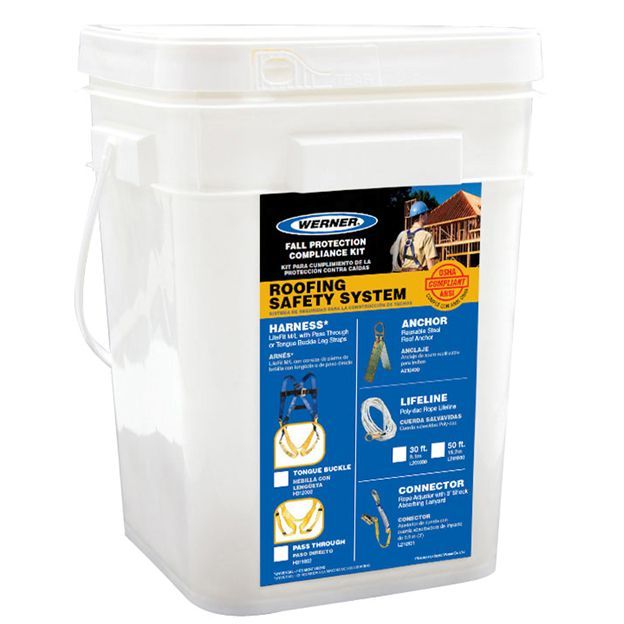
A bucket with a label that says roofing safety system

6. Seasonal Roofing Rentals

Not every tool or piece of equipment needs to be purchased outright. Renting equipment can save you money, especially for tools that are only needed seasonally.


  • Snow Removal Equipment Rentals: If you don’t need snow removal tools year-round, renting is a cost-effective solution. Equipment like the Garlock Sweeper which is a power broom that can be rented during the winter season.
  • Temporary Heat Sources: When working on unheated roofs, renting temporary heaters can help keep your team comfortable and ensure materials like adhesives and sealants cure properly.
  • High-Reach Equipment Rentals: If your winter projects require you to work on higher roofs or in hard-to-reach areas, consider renting aerial lifts or scaffolding to ensure safety and efficiency.

Winter roofing in Everett, WA, requires careful preparation, the right tools, and safety precautions. With the right equipment in hand, you can ensure that your roofing projects proceed smoothly, even in the harshest conditions. At Steve Garlock Equipment, we offer a wide range of cold weather roofing tools, snow and ice removal equipment, and seasonal roofing rentals designed to keep your crew safe and efficient. Reach out to us today to discuss how we can help equip your team for winter roofing projects.
How to Prepare Land for Construction
By Mitch Koch March 9, 2026
Learn how to prepare land for construction in WA and OR. Costs, permits, equipment tips, and step by step guide.
How to Estimate Construction Costs
By Mitch Koch March 3, 2026
Learn how to estimate construction costs in WA & OR with equipment, labor and pricing guidance.
By Mitch Koch February 6, 2026
Understanding What Equipment Is Used on a Construction Site Understanding what equipment is used on a construction site is critical for completing projects safely, on time, and within budget. From early site preparation to final finishing work, construction equipment supports every phase of the job. Using the right machines improves productivity, reduces labor strain, and ensures compliance with safety standards. In Washington and across the Pacific Northwest, construction sites face unique challenges such as varying soil conditions, weather changes, and strict regulatory requirements. Choosing the correct equipment helps contractors adapt to these conditions while maintaining efficiency and protecting workers. Whether the project is residential, commercial, or infrastructure based, equipment selection plays a major role in overall project success. What Equipment Is Used on a Construction Site in Washington and the Pacific Northwest Construction projects in Washington, Oregon, and surrounding states require a wide range of specialized machinery. Climate, terrain, and project scope all influence what equipment is used on a construction site in this region. Why Construction Projects Require Different Types of Equipment Different phases of construction demand different tools and machines. Each category of equipment serves a specific function on the job site. Site preparation: Land clearing, grading, and excavation require heavy earthmoving equipment to prepare a stable foundation Material handling: Transporting materials safely across the site depends on forklifts, cranes, and conveyors Structural work: Lifting steel, concrete, and framing materials requires precise and powerful lifting equipment Finishing and maintenance: Smaller tools and compact machines help complete detailed work and ongoing site upkeep Types of Construction Equipment Used on a Construction Site Earthmoving Equipment Used on a Construction Site Earthmoving machines are essential for shaping the land and preparing it for construction. Excavators Excavators are versatile machines used for digging trenches, foundations, and holes. They are also used for demolition, grading, and lifting heavy materials. Their rotating cab and long arm allow precise operation in tight spaces. Bulldozers Bulldozers are powerful machines designed for pushing large quantities of soil, rock, or debris. They are commonly used for clearing land, leveling surfaces, and moving heavy materials during early project stages. Backhoe Loaders Backhoe loaders combine digging and loading capabilities in one machine. They are ideal for smaller construction sites and utility work where flexibility is needed. Skid Steer Loaders Skid steer loaders are compact and highly maneuverable. They are commonly used for grading, debris removal, and material transport on confined job sites. Motor Graders Motor graders are used to create smooth, level surfaces. They are especially important in road construction and large scale grading projects. Material Handling Equipment Used on a Construction Site Material handling equipment helps move supplies efficiently and safely across the job site. Forklifts Forklifts are used to lift and transport pallets of materials such as lumber, bricks, and steel. They are essential for warehouse style storage and on site logistics. Telehandlers Telehandlers combine the lifting ability of forklifts with extended reach. They are ideal for placing materials at elevated heights and over obstacles. Cranes Cranes are used to lift and position heavy materials that cannot be moved manually. They are critical for multi story construction and large structural components. Conveyors Conveyors move bulk materials such as concrete, gravel, and debris efficiently across the site, reducing manual labor and increasing productivity. Construction Vehicles Used on a Construction Site Construction vehicles support transportation and logistics. Dump Trucks Dump trucks are used to haul soil, gravel, and debris to and from the site. They are essential for excavation and demolition projects. Concrete Mixer Trucks Concrete mixer trucks transport freshly mixed concrete to the site, ensuring consistent quality and timely placement. Flatbed Trucks Flatbed trucks are used to transport oversized equipment, building materials, and machinery to construction sites. Lifting and Hoisting Equipment Used on a Construction Site Lifting equipment ensures heavy loads are moved safely and accurately. Tower Cranes Tower cranes are commonly used on large commercial and high rise projects. They provide exceptional height and lifting capacity. Mobile Cranes Mobile cranes offer flexibility and mobility. They are suitable for short term lifting tasks and projects that require frequent repositioning. Hoists Hoists are used to lift materials vertically, especially in enclosed or confined spaces where cranes are not practical. Concrete and Road Construction Equipment Used on a Construction Site These machines are essential for infrastructure and paving projects. Concrete Mixers Concrete mixers blend cement, aggregate, and water to produce consistent concrete for foundations and structural elements. Concrete Pumps Concrete pumps transport concrete to hard to reach areas, improving efficiency and placement accuracy. Asphalt Pavers Asphalt pavers lay smooth asphalt surfaces for roads, parking lots, and driveways. Compactors and Rollers Compactors and rollers compress soil, gravel, and asphalt to create stable and durable surfaces. Power Tools and Small Equipment Used on a Construction Site Smaller tools support daily tasks and finishing work. Generators Generators provide reliable power when electrical connections are unavailable. Air Compressors Air compressors power pneumatic tools such as nail guns and impact wrenches. Jackhammers Jackhammers break up concrete, asphalt, and rock during demolition and renovation work. Plate Compactors Plate compactors are used for compacting soil and asphalt in smaller areas. What Equipment Is Used on a Construction Site for Different Project Types Residential Construction Equipment Residential projects typically use excavators, skid steer loaders, concrete mixers, and small power tools to complete foundations, framing, and finishing work. Commercial Construction Equipment Commercial sites require cranes, telehandlers, forklifts, and larger earthmoving machines to handle heavier materials and larger structures. Industrial Construction Equipment Industrial projects often involve specialized lifting equipment, heavy duty excavators, and large scale material handling systems. Civil and Infrastructure Construction Equipment Roads, bridges, and public works projects rely on graders, asphalt pavers, rollers, and high capacity dump trucks. How to Choose the Right Equipment for a Construction Site Selecting the right equipment is critical for safety and efficiency. Factors That Affect Equipment Selection Project size: Larger projects require higher capacity machines and more specialized equipment Site conditions: Soil type, slope, and available space influence equipment choice Timeline: Tight schedules may require more efficient or automated equipment Safety requirements: Equipment must meet safety standards and be appropriate for the work environment Common Mistakes When Selecting Construction Equipment Choosing equipment that is too small or underpowered Ignoring site access limitations Overlooking operator training requirements Failing to plan for maintenance and downtime What Are the Signs You Need Specialized Equipment on a Construction Site Limited site access that restricts standard machinery Heavy material loads requiring high capacity lifting Tight deadlines that demand faster production Safety compliance issues requiring certified equipment How Much Does Construction Equipment Cost in Washington Equipment Purchase Costs Purchasing construction equipment involves significant upfront investment, often ranging from tens of thousands to several hundred thousand dollars depending on the machine. Equipment Rental Costs Rental options provide flexibility and lower upfront costs. Pricing depends on equipment type, rental duration, and delivery distance. Factors That Affect Pricing in Washington and the Western States Equipment size and capacity Rental duration Transportation distance Maintenance and support services Why Choose Professional Construction Equipment Services Benefits of Working With an Experienced Equipment Provider Professional providers help match the right equipment to each project, reducing downtime and improving efficiency. Safety, Compliance, and Efficiency Advantages Working with experienced providers ensures equipment meets safety standards and operates reliably throughout the project lifecycle. Serving Construction Projects Across Washington and Beyond Our Equipment Delivery Coverage Steve Garlock Equipment delivers professional construction equipment from Portland Oregon to cities along I 5 from Portland to Everett. Service areas include major Washington construction hubs as well as Oregon locations. We also ship equipment to Montana, Wyoming, Colorado, Arizona, and westward, including Alaska and Hawaii. This wide coverage supports contractors working across multiple states and remote locations. Why Choose Steve Garlock Equipment Reliable Equipment All equipment is professionally maintained and ready for demanding job site conditions. Wide Selection for All Construction Needs From earthmoving machines to material handling equipment, a broad inventory supports projects of all sizes. Regional and Multi State Delivery Capabilities Efficient logistics ensure equipment arrives on time, wherever the project is located. Frequently Asked Questions About What Equipment Is Used on a Construction Site What equipment is used on a construction site most often Commonly used equipment includes excavators, forklifts, dump trucks, skid steer loaders, and concrete mixers. What equipment is required for small construction projects Small projects typically require compact excavators, skid steer loaders, generators, and basic power tools. What equipment is used on a construction site for heavy construction Heavy construction relies on cranes, bulldozers, motor graders, large excavators, and high capacity trucks. Can construction equipment be delivered across state lines Yes. Equipment can be delivered across state lines, including remote and multi state project locations. Contact Steve Garlock Equipment Choosing the right partner for construction equipment makes a measurable difference in project outcomes. Steve Garlock Equipment supports contractors with reliable machinery, professional service, and dependable delivery. Our team understands the demands of construction projects across Washington and the Western United States. From equipment selection to logistics coordination, we focus on safety, efficiency, and long term value. Contact Steve Garlock Equipment today to discuss equipment needs and service coverage across Washington, Oregon, and beyond.
See More Posts